

.png)

Our historical overview 1913 – 2024

.jpeg)
On January 27, 1913, an acting hearing Mr. J.A Van Wyk started the school with only 4 children. Circumstances were very poor and uninspiring. No school desks were available and alternative arrangements had to be made.
Sabie was so remote and difficult to reach that the school struggled so get teachers.
The school occupied a portion of the hotel and the members of the school committee expressed their unhappiness with the condition of their new school. Temporary teachers from Lydenburg North would observe until local teachers could be appointed.
First entry in the admission register of Sabie School was Hendrik Coetser in standard 2, Coenraad, Gert and Frederick Maritz as well as Salmon Marthinus Maritz.
During the Depression years (Early 1933) forestry settlements were established around Sabie (state aid to the unemployed) and schools were opened in Bergvliet, Ceylon, Tweefontein, Brooklands and Spitskop. In 1935 the high department at the school was started up to standard 8 (June / September). In 1963 a standard 9 was introduced and in 1964 a standard 10 class was introduced.
Until 1933 all entries in the school journal were made in English and from 10 October 1933 all entries were made in Afrikaans. On 14 January 1959, the pupils of Spitskop School and Tweenfontein School were transferred to Sabie School. On 13 May 1961, the new section of the school building was taken into use. From 1 January 1967, the High and Primary Schools were officially separated, and High School pupils moved to the new building (Sybrand van Niekerk) on 25 September 1967.
In addition to the historical facts, our cabbage also played its part in the life and suffering of the community, as can be clearly seen from the journal entries, and we quote a few:
-
The first official complaint against the school was made on 2 December 1914 when the parents complained that their children did not know the ABC to this day.
-
The children were absent due to the high rainfall and from the numerous epidemics that plagued them. At one such point, the doctor closed the school after finding worms in the heads of more than 20 children.
The teachers also did not always let them be told what to do. One of the staff members was not keen on schooling. When he heard that he was being inspected, he left the pupils to their own devices and made a claim to dig for gold instead.
In this year we think back to a thousand men and women who were educated in these institutions and we humbly and gratefully acknowledge the work and achievements that helped build this school to what it is today. We would love to stop for a moment to pay tribute to everyone but there is just too much that added value to this beautiful school.
The challenges of the current circumstances to equip our children mentally, morally and physically through dedicated effort of the staff and parents to face the weighty responsibilities of the new millennium with confidence remain our highest priority. We can certainly find direction through what we have learned, experienced, and received from our predecessors.
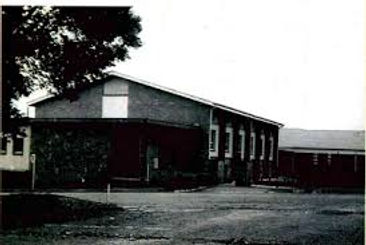
Then

Now
Previous Principles
First: Mr JA Van Wyk (1913)
Mr G van Niekerk Schonken (1914)
Mr WF Easton (1915)
Mr. JF Bosch (1916)
Mr. DSA van der Spuy (1933)
Mr. Barnard (1936)
Mr. PH Kat (1938)
Mr. B Koeleman (1943)
Mr. JPL du Plessis (1944)
Dr. MW Smuts( (1944)
Mr WCJB du Toit (1960)
Mr. CA Coetzee (1962)
Mr. R Gouws (1973)
Mr. CGG Lancaster (1996)
Mr. JW Groenewald (2003)
Mr J Kruger (2011)